
THE BURNING RIM · SCIENCE
CLIMATE
SCIENCE
Understanding climate change through atmospheric physics, ocean dynamics and scientific observation.
Climate science studies the complex interactions between atmosphere, oceans, land surfaces,
radiation and biological systems. These components form a single interconnected system where
changes occurring in one region or layer can influence processes at global scale.
One of the strongest scientific evidences of climate change is the continuous increase in global
average temperatures observed since the industrial era. This warming trend is primarily linked
to the growth of greenhouse gas concentrations produced by human activities such as fossil fuel
combustion, industrial processes and land-use changes.
Greenhouse gases absorb and re-emit infrared radiation, reducing the amount of heat that escapes
into space. This process alters Earth’s radiative balance and increases the energy retained within
the climate system.
However, climate change is not limited to surface warming alone. Scientific observations show that
the atmosphere is changing vertically as well. The troposphere is warming while the stratosphere
above it is cooling — a characteristic signature associated with anthropogenic greenhouse forcing.
This vertical contrast affects atmospheric circulation, wave propagation and the structure of the
tropopause, the transition region separating the lower and upper atmosphere.
The climate system also depends strongly on ocean dynamics. Oceans absorb more than 90% of the
excess heat accumulated by greenhouse forcing. The Mediterranean Sea, because of its semi-enclosed
structure, responds particularly rapidly to temperature increases and acts as a regional climate amplifier.
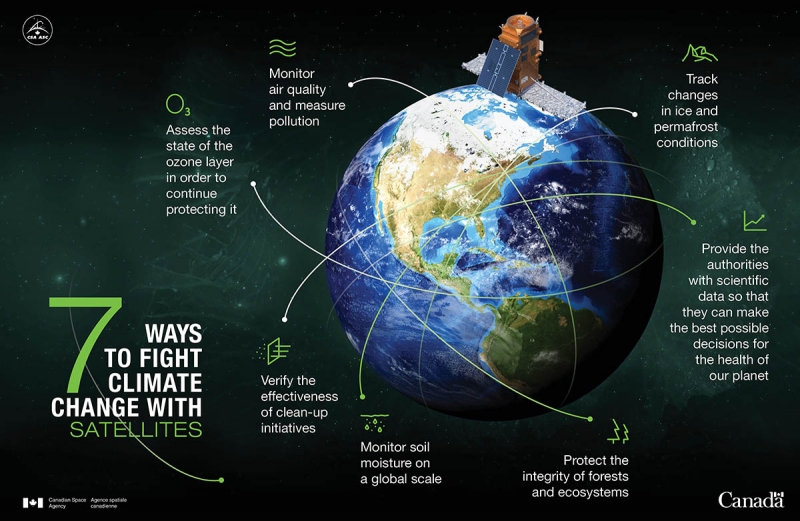
Scientific measurements collected through satellites, radiosondes, aircraft campaigns and climate
models provide detailed information about these transformations. Long-term datasets allow researchers
to identify trends, correlations and anomalies across different atmospheric layers.
Atmospheric dynamics play a crucial role in climate evolution. Jet streams, Rossby waves and
large-scale circulation systems regulate heat transport and influence regional weather behavior.
Small perturbations in these structures can modify storm tracks, drought persistence and precipitation patterns.
Another important field of study concerns Stratosphere–Troposphere Exchange (STE), a process through
which air masses move vertically between atmospheric layers. STE influences ozone transport,
atmospheric chemistry and radiative processes.
Aviation emissions, volcanic aerosols and natural atmospheric variability also interact with the
climate system, contributing to its complexity. Understanding climate therefore requires a
multidisciplinary scientific approach capable of integrating physics, chemistry, meteorology and data analysis.
Climate science does not attempt to predict single events with certainty. Instead, it studies trends,
probabilities and system responses over long timescales. Through this perspective, researchers can
identify the mechanisms driving climate transformation and estimate future scenarios.
RADIATIVE FORCING
Greenhouse gases alter Earth’s energy balance by trapping infrared radiation and increasing atmospheric heat retention.
ATMOSPHERIC DYNAMICS
Jet streams, waves and circulation systems regulate heat transport and influence weather evolution.
OBSERVATION
Satellites, climate models and atmospheric measurements provide evidence of long-term climate transformation.
SCIENCE AS A TOOL TO READ CHANGE
Climate science transforms observations into understanding, connecting atmospheric physics,
ocean dynamics and long-term environmental evolution.
Through scientific research it becomes possible to interpret the signals emerging from the
atmosphere and identify the mechanisms shaping the future climate of the Mediterranean region.
The Burning Rim combines scientific interpretation, visual communication and data storytelling
to make these complex processes accessible and readable.